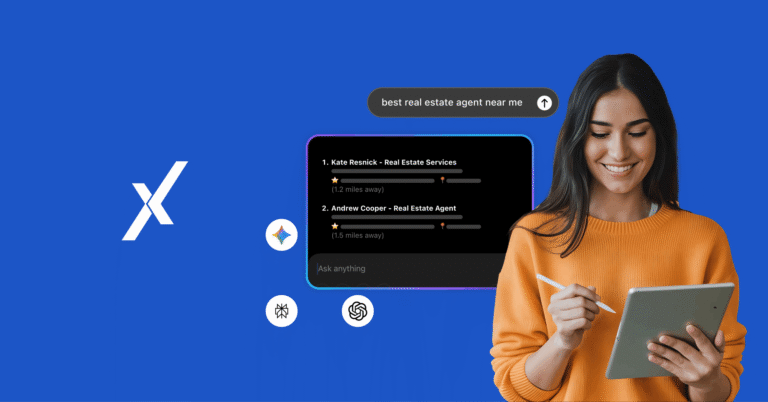






Search is changing, and fast.
Ranking on Google used to be the goal. If you appeared on page one, you were visible. If you ranked #1, you won.
But AI search doesn’t work that way.
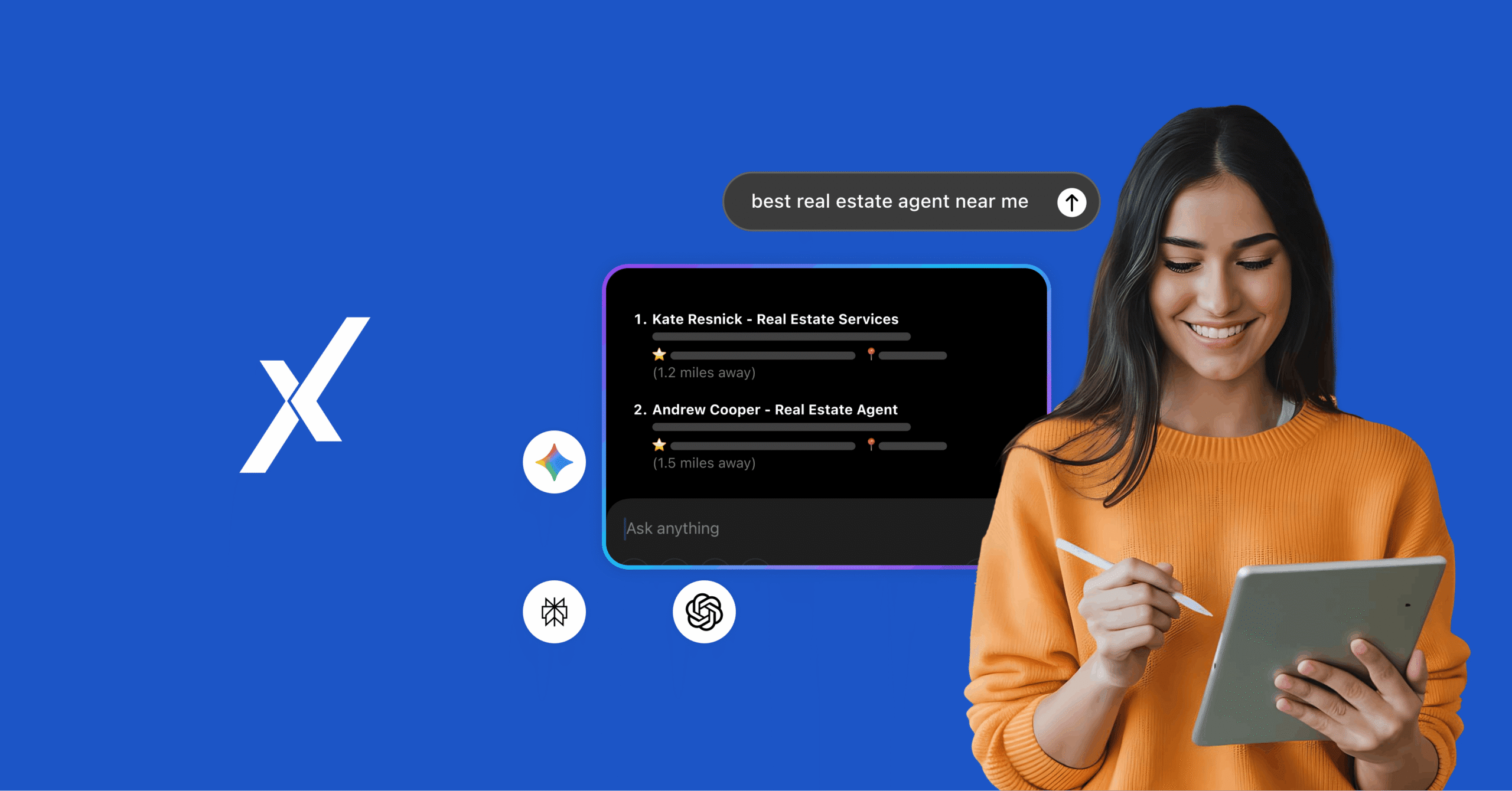
Today, customers are asking AI systems questions like:
- “Who is the best mortgage lender near me?”
- “Which real estate agent specializes in first-time buyers?”
- “What’s the most reliable HVAC company in Austin?”
And instead of showing a list of websites, AI generates an answer.
The question isn’t just “How do I rank?”
It’s now:
How do I become the answer?

The Shift from Blue Links to AI Answers
Traditional search shows links.
AI search shows conclusions.
AI systems like Google’s AI Overviews, ChatGPT, Gemini, and Perplexity:
- Summarize information
- Cite select sources
- Recommend professionals
- Provide direct answers
They don’t just list ten websites and let users decide. They interpret information and present a trusted recommendation.
If your expertise isn’t structured in a way AI can understand, it won’t include you in that answer, even if you rank well.
Why Ranking #1 on Google Doesn’t Guarantee AI Visibility
Many businesses assume:
“If we rank well, we’ll show up in AI too.”
Not necessarily.
AI systems prioritize:
- Clear authorship
- Demonstrated expertise
- Structured content
- Consistent topic coverage
- Local relevance
- Question-answer alignment
Traditional SEO focuses heavily on:
- Keywords
- Backlinks
- Technical optimization
- On-page ranking signals
AI search focuses more on:
- Clarity of expertise
- Context
- Authority signals
- Intent matching
- Recency and consistency
Ranking builds foundation.
But AI recommendations require structured authority.
What AI Search Engines Actually Look For
If you want to show up in AI search results, your content needs to help AI clearly answer three questions:
- Who is this professional?
- What exactly do they specialize in?
- Where do they operate?
And then a fourth, critical question:
- Have they consistently demonstrated expertise in this area?
Here’s what that means in practice:
1. Structured Expertise
Your content needs to clearly communicate:
- Your industry focus
- Your niche expertise
- Your location
- Your authority on specific topics
Generic blog content doesn’t work well in AI environments.
2. Question-Answer Alignment
AI systems are trained on question-answer patterns.
Professionals who consistently answer real customer questions, clearly and directly, send strong clarity signals.
3. Local Relevance
AI recommendations are often hyperlocal.
“Best mortgage lender near me” is not the same as “best mortgage lender in the U.S.”
Content must reflect specific geography.
4. Consistency Over Time
Authority is not built in a single article.
AI models detect:
- Ongoing topic coverage
- Freshness
- Repeated expertise signals
Publishing once and disappearing doesn’t build visibility.
The Missing Piece: Structured Authority
Most professionals already have expertise.
The problem isn’t a lack of knowledge.
The problem is that expertise often lives:
- On scattered blog posts
- Across social media
- In unstructured website pages
- In one-off articles
AI needs clarity and structure.
Without a consistent system to publish, answer, and reinforce expertise, professionals remain invisible in AI-generated answers.

How to Build AI-Readable Authority
If you want to show up in AI search results, you need a repeatable structure.
That structure typically includes:
1. Long-Form Expertise
Publish in-depth articles on:
- Core service areas
- Market-specific insights
- Frequently misunderstood topics
- Real client scenarios
Long-form content builds depth.
2. Real Question Answering
Answer questions your customers are already asking:
- “How much are closing costs in Austin?”
- “How long does it take to install a new HVAC system?”
- “What credit score do I need to buy a home?”
Clear, direct answers create strong AI clarity signals.
3. Identity + Location Signals
Your content must clearly connect:
- Your name
- Your professional identity
- Your location
- Your industry
Anonymous or loosely attributed content is far less powerful.
4. Consistent Publishing Rhythm
Authority compounds over time.
Publishing monthly and answering questions consistently is far more effective than publishing everything at once.
The Role of Structured Publishing Platforms
Implementing this manually can be difficult.
Many professionals:
- Don’t have a structured content workflow
- Don’t track authority signals
- Don’t know how AI interprets their content
That’s where structured authority platforms come in.
For example, VOCE is designed specifically to help professionals:
- Write structured, AI-readable articles
- Answer real customer questions
- Publish content connected to verified identity
- Build measurable AI authority signals
- Strengthen local expertise clarity
When combined with a strong ranking foundation, such as Experience.com’s Search Rank Platform, professionals build both:
- Traditional search visibility
- AI-generated answer visibility
Ranking builds the base.
Structured authority builds AI clarity.
Together, they significantly increase the likelihood of being cited and recommended in AI search environments.
Becoming the Answer
The future of search isn’t about appearing in a list.
It’s about being referenced in the answer.
Professionals who:
- Publish structured expertise
- Answer real questions
- Maintain consistency
- Reinforce local authority
Position themselves to be understood, and recommended, by AI systems.
If you want to show up in AI search results, don’t just optimize for ranking.
Build authority that AI can clearly understand.
Because in the era of AI search, visibility doesn’t belong to the loudest voice.
It belongs to the clearest one.
Frequently Asked Questions
1) What does it mean to “show up” in AI search results?
It means your business or content is used as a trusted source in an AI-generated answer, either as a cited reference, a quoted source, or a recommended expert.
2) Is ranking on Google enough to appear in AI answers?
Ranking helps, but it’s not enough on its own. AI answers often prioritize clarity, structured expertise, local relevance, and question-answer alignment, not just link position.
3) How do AI systems decide who to cite or recommend?
AI systems tend to rely on sources that demonstrate clear expertise, consistent topic coverage, attributable authorship, and content that’s easy to parse and map to a question.
4) What kind of content increases AI visibility the fastest?
Direct, helpful answers to real customer questions (Q&A-style content) often creates faster clarity for AI systems, especially when paired with deeper articles that show authority.
5) Do I need to publish every day for AI visibility?
No. Consistency matters more than frequency. Publishing on a steady cadence (for example, monthly articles plus regular Q&A) is typically better than posting in bursts and stopping.
6) Can I use AI tools like ChatGPT to write content and still show up in AI search?
You can, but AI-generated text alone doesn’t guarantee trust or visibility. The key is structuring expertise with clear authorship, local relevance, and a consistent body of work that AI can attribute and understand.
7) How do VOCE and Search Rank Platform help with AI search visibility?
Search Rank Platform supports traditional search visibility and credibility foundations. VOCE focuses on publishing structured expertise and question-answer signals that help AI systems understand, trust, and surface your authority in AI-generated answers.