

There was a time when your resume was the first impression. It listed your experience, your credentials, your achievements. It told people who you were before they met you.
That’s no longer how professionals are only evaluated, anymore.
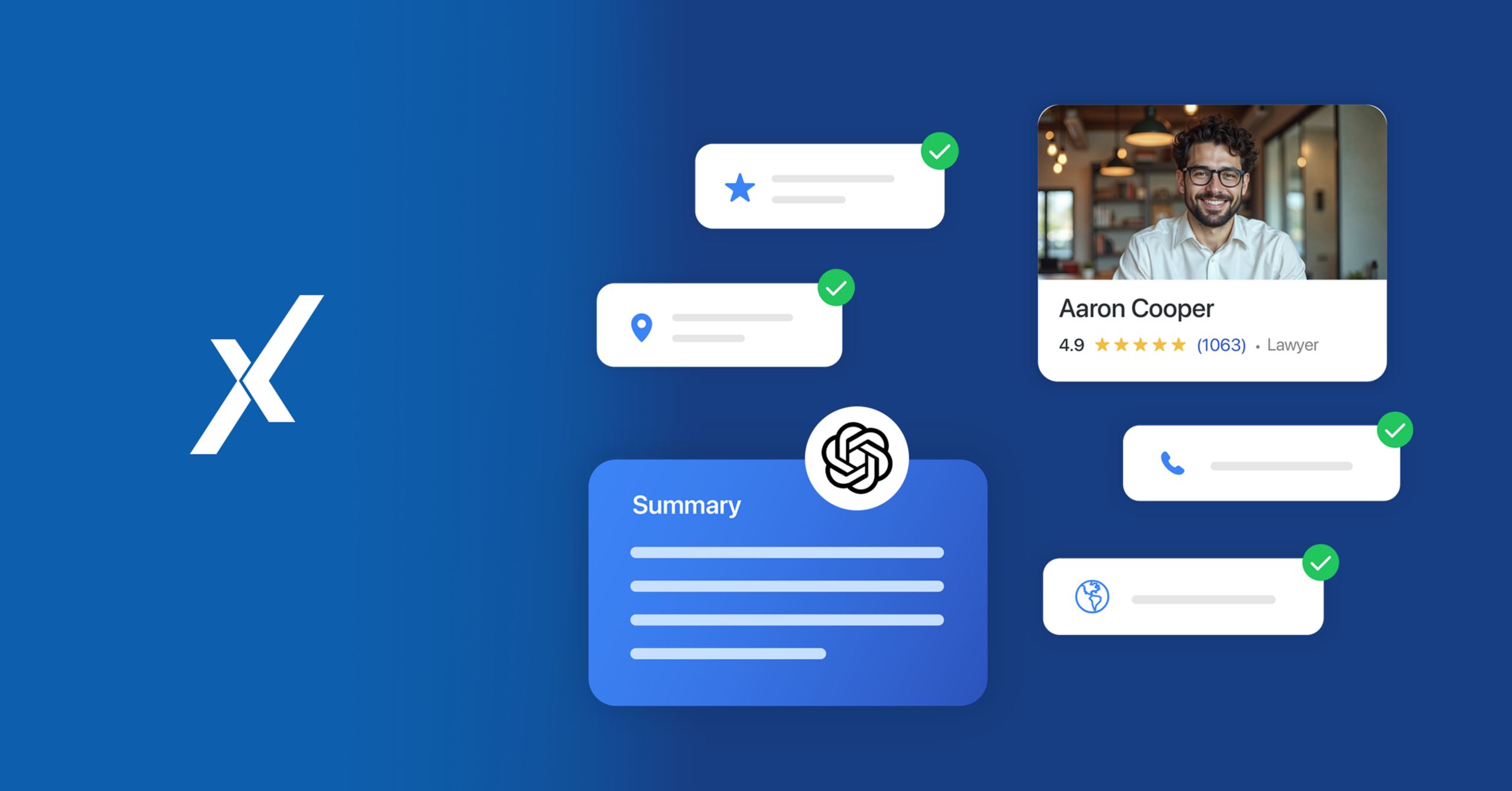
Today, before a prospect even emails you, calls you, or fills out a form, they Google you. Increasingly, they also ask AI tools for recommendations. They don’t just look at your website, or your About section, they look at what the internet says about you.
And in that moment, your reputation becomes your resume.
The Quiet Evaluation That Happens Before You Know It
Imagine someone searching:
- “Top mortgage lender in Denver”
- “Best real estate agent near me”
- “Trusted financial advisor in Chicago”
Before they ever contact anyone, Google and AI systems sort through available professionals. They evaluate profiles, reviews, activity, consistency, and authority signals.
This evaluation happens instantly and invisibly.
By the time a prospect lands on your page (or doesn’t), much of the decision-making has already happened.
What Search Engines and AI Actually See
When Google or AI tools evaluate a professional, they don’t see intention. They see signals.
They see:
- Review quality and recency
- Consistent identity information
- Structured profile data
- Defined service areas
- Mentions and citations
- Engagement and activity
They piece together these signals to determine credibility.
If your information is consistent, detailed, and actively maintained, it builds confidence.
If it’s fragmented, outdated, or thin, it introduces uncertainty.
Search systems are designed to reduce risk. They favor professionals whose digital presence makes them easy to validate.
Your Digital Footprint Speaks Before You Do
Prospects may never see your resume.
But they will see:
- Your review summaries
- Your average rating
- Your bio
- Your activity level
- Your responses to client feedback
In many cases, AI tools summarize this information into a few sentences. Those sentences influence perception long before a conversation begins.
That means your reputation is no longer just social proof. It’s a structured narrative about your professionalism.
And if that narrative is weak, incomplete, or inconsistent, it can quietly limit your opportunities.
The Difference Between Passive and Managed Reputation
Some professionals treat reviews and profiles as something that “just happens.”
Others treat them as assets.
The difference shows up in visibility.
Professionals who actively:
- Generate thoughtful, detailed reviews
- Keep profiles complete and updated
- Ensure consistency across platforms
- Respond to feedback
- Clarify their expertise and specialties
…create a digital presence that is easier for search engines and AI systems to interpret.
Clarity increases confidence. Confidence increases visibility.
Why This Matters More Now
AI-driven search is compressing the decision-making process.
Instead of comparing ten websites, prospects are increasingly relying on summaries. When AI tools generate answers, they draw from structured information across the web.
That means your reputation doesn’t just influence whether someone clicks your link.
It influences whether you’re mentioned at all.
And if you’re not part of the answer, you’re often not part of the consideration set.
Building a Resume That Updates Itself
A traditional resume was static. You updated it occasionally.
A digital reputation is dynamic. It evolves with every review, every profile update, every response.
Professionals who recognize this shift understand that visibility isn’t accidental. It’s built.
Your online presence should clearly communicate:
- Who you are
- What you specialize in
- Where you operate
- Why clients trust you
When those signals are structured and aligned, your reputation becomes a living resume, one that works for you even when you’re not actively promoting yourself.
The New First Impression
The first impression doesn’t happen in a meeting room anymore.
It happens in search results.
It happens in review summaries.
It happens in AI-generated answers.
And those systems don’t evaluate charisma or intent. They evaluate clarity and credibility.
In this environment, reputation is not a marketing add-on.
It’s the foundation of professional visibility.
If your digital presence clearly reflects your expertise and earns consistent validation, you’re far more likely to be seen and trusted.
Because today, your reputation isn’t just part of your brand.
It is your resume.
Frequently Asked Questions
1. Why is reputation important for search visibility?
Search engines evaluate review quality, profile completeness, and identity consistency to determine which professionals to rank and reference.
2. How do AI tools evaluate professionals?
AI systems analyze structured information across the web, including reviews, credentials, service areas, and authority signals, before referencing a professional.
3. Does a strong resume help with online visibility?
A traditional resume does not directly impact search rankings. Your online presence including reviews, profiles, and structured information, plays a much larger role.
4. What makes a professional more visible in AI search?
Professionals with consistent digital identities, recent and descriptive reviews, and complete structured profiles are more likely to be surfaced in AI-generated answers.
5. How does Experience.com help professionals strengthen their reputation?
Experience.com helps professionals build structured, consistent digital profiles supported by verified reviews and reputation data, making it easier for search engines and AI systems to validate their expertise.