








When someone searches for a professional near them — a mortgage lender, a real estate agent, an insurance advisor — Google has one job:
Show the most trustworthy options first.
But what does “trustworthy” actually mean to Google?
It’s not a single metric. It’s not just five-star ratings. And it’s not simply who has the best website.
Google evaluates patterns. Signals. Consistency. Credibility.
If you understand what those signals are, you can stop guessing — and start building visibility strategically.
Here are five of the strongest signals that influence whether Google sees you as a trusted local professional.
1. Consistent Identity Across the Web
Google wants confidence that you are who you say you are.
That means your:
- Name
- Business name
- Address
- Phone number
- License details
- Specialties
…should be consistent everywhere they appear.
If your business name is formatted three different ways across directories, if your address is abbreviated in one place and spelled out in another, or if your specialties vary wildly from site to site, it creates uncertainty.
Search engines cross-reference information constantly. The more consistent your digital identity is, the easier it is for Google to validate you.
Consistency builds trust.
2. Review Quality, Recency, and Relevance
Yes, ratings matter. But Google looks beyond the stars.
It evaluates:
- How recent your reviews are
- How frequently new reviews come in
- The language inside the reviews
- Whether clients mention specific services and outcomes
A profile with 200 reviews from five years ago is less powerful than one with steady, recent feedback.
Descriptive reviews are especially important. When clients mention details — responsiveness, expertise, specific transactions — those keywords reinforce what you actually do.
Reviews are not just social proof. They are data.
3. Complete and Structured Profiles
An incomplete profile is a weak signal.
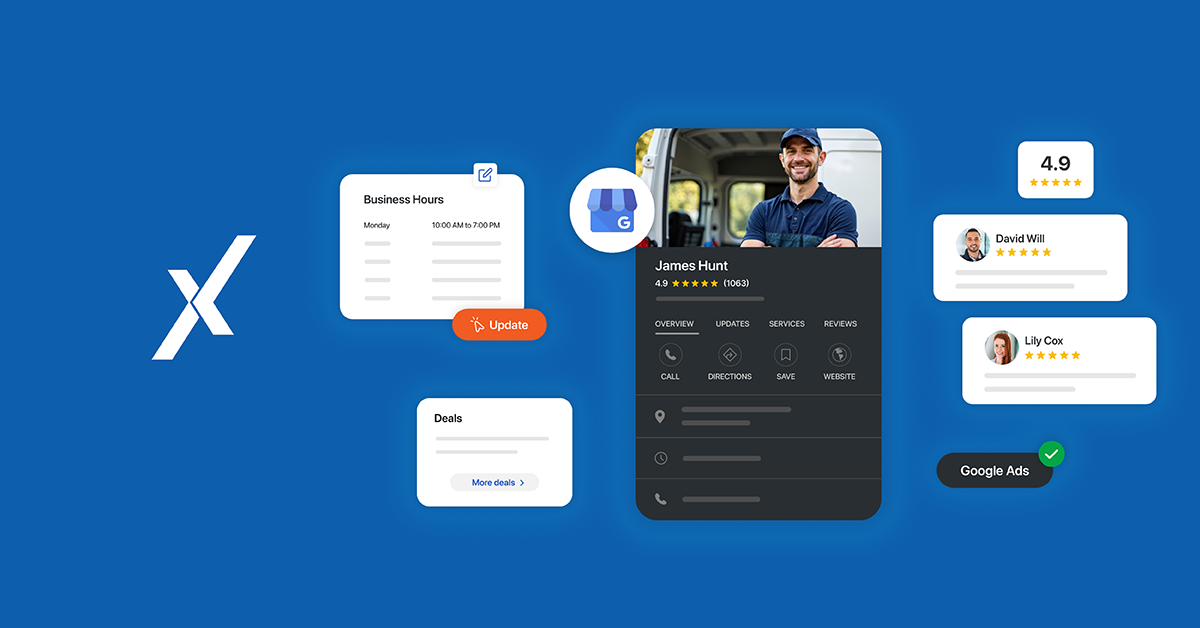
Google favors professionals who provide:
- Detailed bios
- Clear service categories
- Defined service areas
- Updated credentials
- Professional photos
- Business hours
The more complete your profile, the easier it is for search engines to understand your role and relevance.
Thin profiles don’t necessarily hurt you — but they don’t help you either.
Structured, complete information makes you easier to categorize and rank.
4. Local Authority Signals
Google doesn’t evaluate you in isolation. It evaluates you within your local ecosystem.
That includes:
- Mentions on reputable local sites
- Listings in relevant directories
- Consistent citations
- Backlinks from credible sources
- Engagement on your Google Business Profile
If you operate in Austin, Chicago, or Denver, Google wants to see that you are meaningfully connected to that geography.
Local trust isn’t just about having an address in a city. It’s about demonstrating relevance within that market.
5. Ongoing Activity and Engagement
Dormant profiles don’t inspire confidence.
Google pays attention to signals like:
- Updated information
- New reviews
- Responses to client feedback
- Fresh content
- Regular engagement
When your presence is active and maintained, it signals legitimacy.
When it’s outdated or static, it can signal neglect.
Trust, in search terms, is often tied to momentum.
Why This Matters More in 2026
Search behavior is evolving. AI-driven summaries and conversational search tools are increasingly pulling from the same underlying trust signals that power traditional rankings.
That means these five signals don’t just influence whether you rank — they influence whether you’re referenced at all.
Local visibility is no longer about one tactic. It’s about building a clear, consistent, and credible digital footprint.
The Common Mistake Professionals Make
Many professionals focus heavily on one area — usually reviews — and ignore the rest.
Or they optimize their website but leave third-party profiles incomplete.
Or they generate reviews but never respond to them.
Trust isn’t built from a single signal. It’s built from alignment.
When your identity is consistent, your reviews are recent and descriptive, your profiles are complete, and your presence is active, Google has fewer reasons to hesitate.
And fewer reasons to rank someone else above you.
Building Trust Is a System
The professionals who consistently show up at the top of local search results aren’t lucky.
They treat their digital presence as something that needs to be structured and maintained — not something they update once and forget.
Because at the end of the day, Google isn’t trying to reward marketing.
It’s trying to reduce risk.
If your online presence makes it easy to verify who you are, what you do, and why clients trust you, you’re far more likely to be seen as the safe choice.
And in search, the safe choice often wins.
About Experience.com
Experience.com helps professionals build structured, trusted digital identities that improve visibility across search engines and AI-driven platforms.
Frequently Asked Questions
1. How does Google decide which local professionals rank higher?
Google evaluates multiple trust signals, including consistent business information, review quality and recency, profile completeness, local authority signals, and ongoing engagement.
2. Do more reviews automatically improve local rankings?
Not necessarily. While review volume matters, Google also evaluates review recency, frequency, and the depth and specificity of feedback.
3. Why is consistent business information important for local SEO?
Search engines cross-reference information across directories and platforms. Inconsistent details reduce confidence, while aligned information strengthens trust and validation.
4. Does updating my Google Business Profile improve visibility?
Yes. Regular updates, responding to reviews, and maintaining accurate information signal activity and legitimacy, which can positively impact visibility.
5. How can professionals systematically improve Google trust signals?
Professionals can improve trust signals by maintaining structured and complete profiles, generating detailed reviews consistently, aligning identity information across platforms, and actively managing their digital presence.
6. How does Experience.com support local search visibility?
Experience.com helps professionals strengthen review quality, maintain structured digital profiles, and ensure consistency across platforms, making it easier for search engines to validate and rank them confidently.