

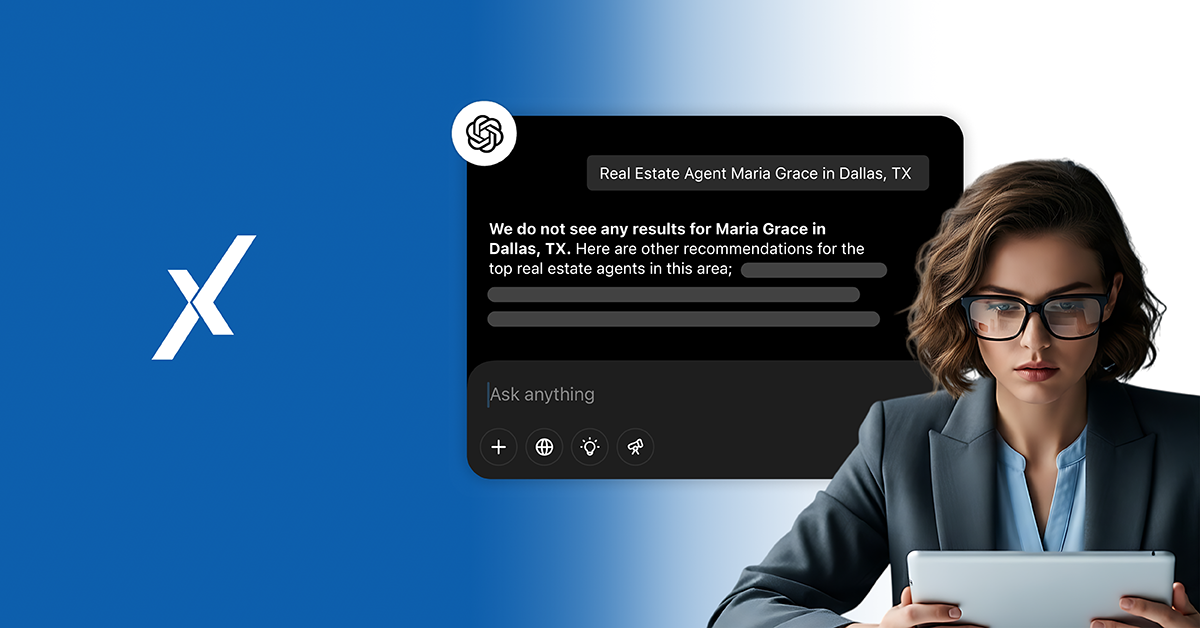
For years, professionals have focused on one core question:
How do I rank higher on Google?
That made sense when search meant scrolling through ten blue links and clicking around to compare options.
But that’s not how people search anymore.
Today, prospects don’t just type keywords. They ask questions. They ask ChatGPT. They ask Gemini. They use AI assistants built directly into search engines. And instead of getting a list of links, they get a single, synthesized answer.
That shift changes everything.
Because when AI gives one answer, or even a short list, it’s no longer about simply showing up somewhere on page one. It’s about being selected.
Which brings us to a harder question:
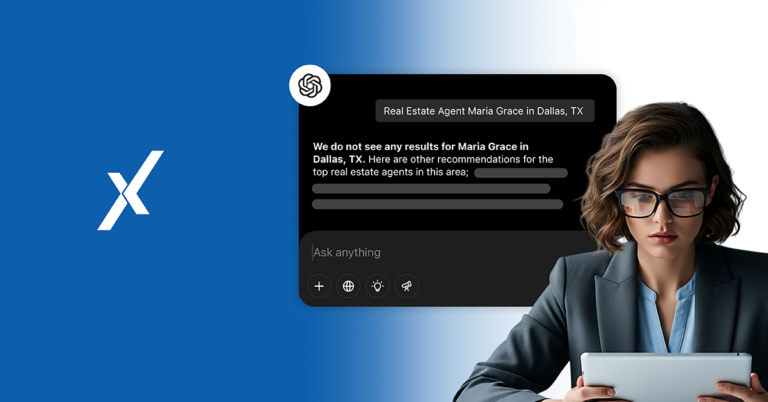
If ChatGPT doesn’t mention you, how visible are you really?
From Ranking on a Page to Being Chosen
Traditional search gave you multiple chances to be seen. If you ranked in the top five, you were in the game. Even being slightly lower wasn’t fatal, people could still scroll.
AI-driven search works differently.
Large language models don’t display options the way Google used to. They evaluate information, compare signals, and generate a response. In that response, they reference certain professionals, companies, and sources, and leave out others.
Visibility is no longer just about ranking. It’s about being understood and trusted enough to be included in the answer.
That inclusion isn’t random. It’s based on signals.
What AI Is Actually Looking At
AI systems don’t “like” one professional more than another. They analyze patterns across the web and look for consistency, credibility, and depth.
When someone asks:
- “Who is the best mortgage lender in Austin?”
- “Top real estate agents near me.”
- “Most trusted insurance advisor in Chicago.”
AI evaluates the digital footprint behind those professionals.
Here are a few of the signals that matter most.
Consistency Across Your Digital Identity
Is your name spelled the same everywhere?
Are your credentials accurate and complete?
Do your specialties match across platforms?
When your information is fragmented or inconsistent, it weakens confidence. When it’s aligned and complete, it strengthens it. AI systems rely heavily on corroborated information. The clearer and more consistent your identity is, the easier it is to recognize you as a legitimate authority.
Depth and Quality of Reviews
Five stars help. But stars alone don’t tell the full story.
AI models can interpret language. They look at the content inside reviews, how specific they are, how recent they are, how consistently they reflect trust and expertise.
Detailed, descriptive feedback provides context. And context is what helps machines, and people, understand why you’re credible.
Structured, Complete Profiles
A thin bio and a few bullet points aren’t enough anymore.
Profiles that clearly outline your expertise, service areas, credentials, and experience are easier to interpret. Structured information makes it simpler for AI systems to understand who you are and what you do.
If your online presence is shallow or outdated, you’re not necessarily being penalized, you’re just not being clearly understood.
And if you’re not clearly understood, you’re less likely to be referenced.
Signals Beyond Your Own Website
AI doesn’t rely on your website alone.
It looks at review platforms, professional directories, third-party mentions, and other structured sources of information. The stronger and more consistent those signals are, the more trustworthy you appear.
When everything aligns, it builds confidence. When it’s scattered, it creates doubt.
Why Traditional SEO Isn’t the Whole Picture Anymore
SEO still matters. Keywords, backlinks, and technical optimization are important.
But they’re only part of the equation now.
Ranking on a page doesn’t automatically mean you’ll be mentioned in an AI-generated answer. That’s because AI isn’t just looking for optimized content, it’s evaluating overall credibility and clarity.
You’re no longer competing solely for keywords. You’re competing to be clearly defined and confidently validated across the digital ecosystem.
That’s a higher bar.
Reputation Has Become Infrastructure
In this new environment, your reputation isn’t just marketing.
It’s infrastructure.
Every review, every profile detail, every consistent data point contributes to how you’re perceived, not just by prospects, but by the systems interpreting your presence.
Professionals who actively manage their digital footprint, keeping profiles updated, generating thoughtful reviews, ensuring consistency across platforms, make it easier for AI systems to recognize and reference them.
And the easier you are to recognize, the more likely you are to be included.
The Professionals Who Get Overlooked
Here’s the uncomfortable reality: many excellent professionals are effectively invisible in AI search.
Not because they lack skill.
But because their digital presence is incomplete.
Outdated bios.
Generic reviews.
Profiles that don’t fully reflect their expertise.
Information that doesn’t match across platforms.
AI doesn’t judge them. It simply doesn’t have enough structured confidence to surface them.
In a world where answers are generated instantly, being unclear is almost the same as being absent.
So, Are You Truly Visible?
When a prospect asks AI, “Who should I trust?” – does your name come up?
If it doesn’t, the issue likely isn’t your experience or your results.
It may be how your expertise is represented online.
Professional visibility has evolved. It’s no longer just about being listed. It’s about being clearly defined, consistently validated, and easy to understand across the web.
Because in the age of AI-driven search, visibility isn’t just about showing up somewhere.
It’s about being part of the answer.
About Experience.com
Experience.com helps professionals build structured, trusted digital identities that improve visibility across search engines and AI-driven platforms.
Frequently Asked Questions
1. How does ChatGPT decide which professionals to mention?
AI systems analyze patterns of trust and authority across the web. They evaluate consistent identity information, structured profile data, review quality, and corroborated signals across multiple platforms before referencing a professional.
2. Does ranking on Google guarantee AI visibility?
No. Ranking on Google does not automatically mean you will be referenced in AI-generated answers. AI systems evaluate broader credibility signals beyond traditional keyword rankings.
3. What makes a professional more likely to be referenced in AI search?
Professionals with consistent identity information, detailed and recent reviews, structured profiles, and aligned signals across platforms are more likely to be recognized and referenced.
4. Why are some experienced professionals invisible in AI search?
Many professionals have fragmented or incomplete digital footprints. Outdated bios, inconsistent data, and shallow profiles reduce the confidence AI systems have in referencing them.
5. How can I improve my AI search visibility?
Improving AI visibility requires maintaining structured, complete profiles, generating detailed reviews, and ensuring consistent information across all professional platforms.
6. How does Experience.com help professionals improve AI search visibility?
Experience.com helps professionals build structured, consistent digital profiles supported by verified reviews and reputation data. By strengthening identity signals, review quality, and cross-platform consistency, Experience.com makes it easier for search engines and AI systems to understand, validate, and reference a professional’s expertise.