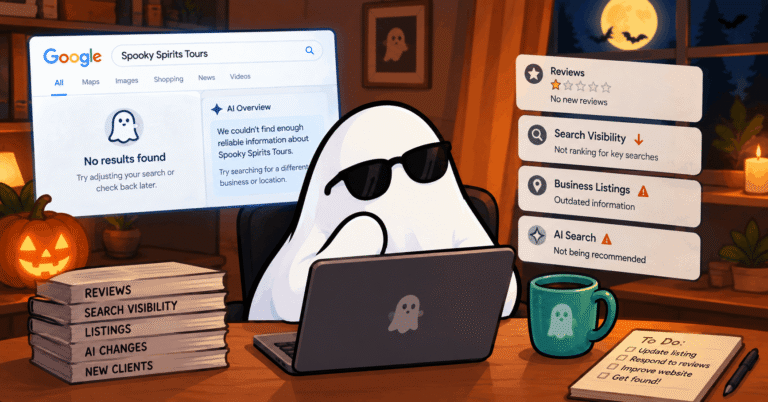









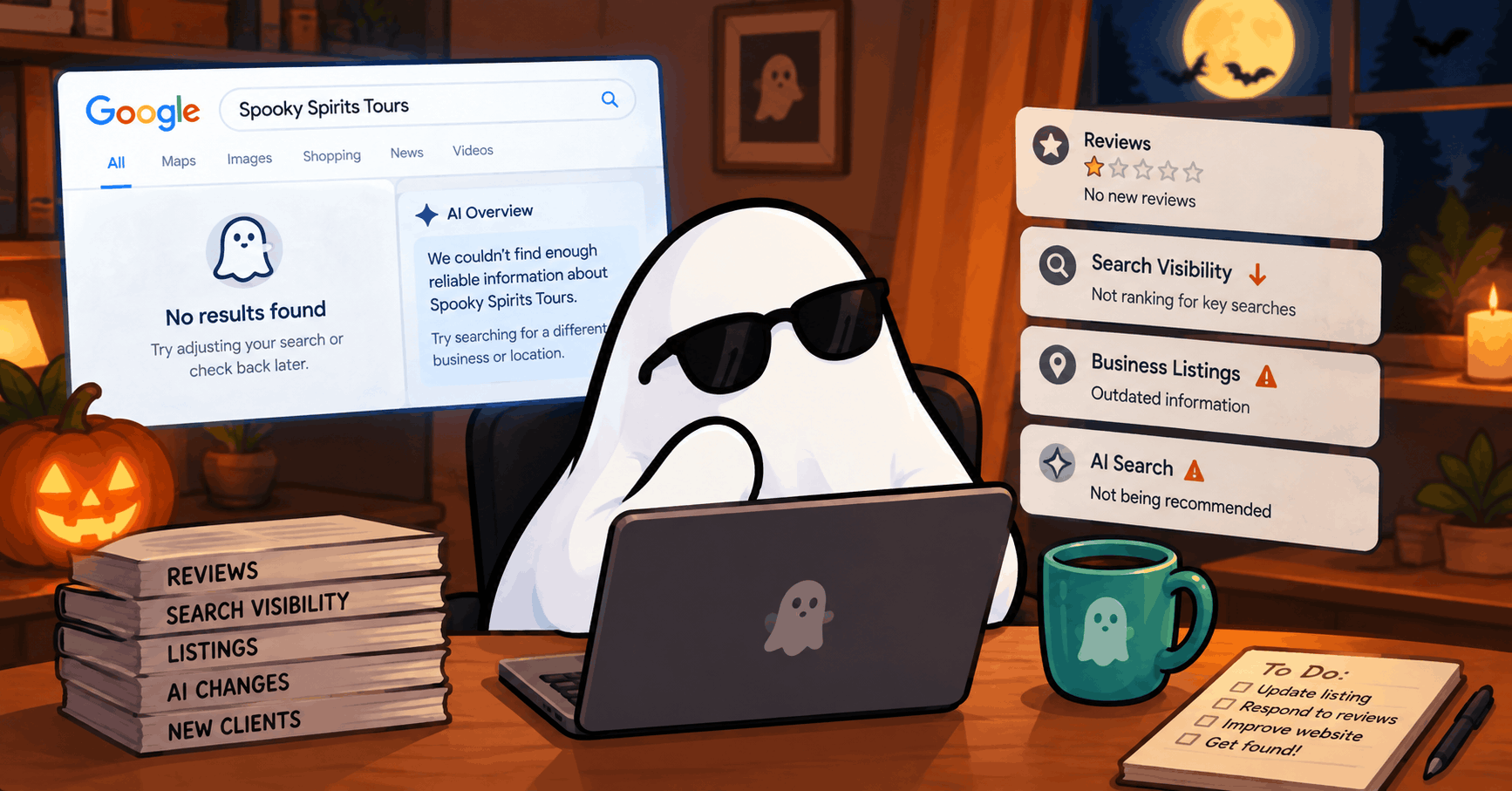
The scariest thing about being ghosted? You may never know it’s happening.
Some businesses don’t lose customers at the point of sale. They lose them long before the conversation begins.
A potential customer searches for a service, scans a few businesses and finds one with clear information, recent reviews and an easy next step. Your business never makes the shortlist. No call, no enquiry, no explanation. Just silence.
That’s the unsettling part. You may never know how many opportunities passed you by because customers couldn’t find you, couldn’t verify your information or didn’t see enough reason to choose you.
This is what it means to be ghosted in local search. And before blaming your sales team, your pricing or the competition, it may be worth examining the signals your business leaves behind.
1. The invisible business: When customers can’t find you
Imagine opening a store every morning, preparing your team and getting everything ready for customers, only to discover that nobody knows where you are.
That’s what poor local search visibility can feel like. Your business may offer exactly what someone needs, but if it doesn’t appear for relevant searches, potential customers may never discover it.

Google identifies relevance, distance and prominence as key factors in local search rankings. Businesses can influence parts of this equation by maintaining complete, accurate information and building a credible presence, but no single action guarantees a top position.
For local businesses, the first step is to check whether customers can find the information they need.
- Is your business profile complete and accurate?
- Are your services, location and contact details easy to find?
- Do your website pages clearly explain what you offer and where you operate?
Start with the basics before chasing every new search tactic. A business that’s difficult to discover has fewer opportunities to enter the customer’s consideration set.
The practical fix: Review your visibility for the services and locations that matter most. Correct missing information, improve incomplete profiles and make your core service pages easier to navigate.
2. The haunted reputation: When customers find you but hesitate
Getting discovered is only the beginning. Once customers find your business, they look for reasons to trust it.
Reviews, ratings, business details and website content all help potential customers form an impression. If they encounter unanswered complaints, outdated information or very little detail about your services, they may hesitate to take the next step.
Think of your online reputation as the first impression that walks into the room before you do. It can help customers feel confident about contacting you, or leave them with questions your team never gets the chance to answer.
Research reinforces the importance of reviews in consumer decision-making. Reviews aren’t the only factor in a decision, but they give customers a way to learn from other people’s experiences.
That doesn’t mean every negative review is a crisis or every business needs a perfect rating. What matters is responding thoughtfully, learning from recurring feedback and giving potential customers an honest picture of what they can expect.
The practical fix: Establish a consistent process for requesting genuine feedback, responding to reviews and identifying recurring concerns. Treat reviews as both a trust signal and a source of insight into the customer experience.
3. The phantom listing: When your business tells conflicting stories
A customer finds your business on Google, checks your website and visits a directory listing before calling. Your website shows one phone number, the directory displays another and your business profile lists outdated opening hours.
Suddenly, the customer has a mystery to solve. They shouldn’t have to investigate your business just to figure out how to reach you.

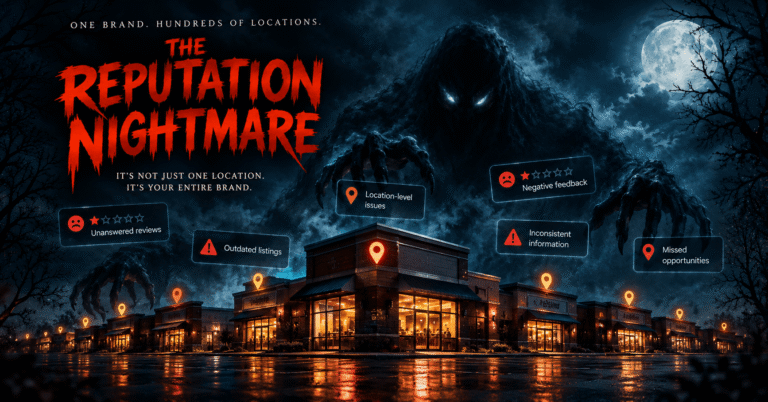
These inconsistencies can become harder to manage as businesses expand across locations. Each branch may have different hours, services, contact details and local requirements. Without clear ownership, small errors can linger across multiple platforms.
The challenge isn’t simply getting your business information published. It’s keeping that information accurate as the business changes.
For multi-location organizations, this calls for a defined source of truth, clear responsibility for updates and a process for checking that information remains consistent across relevant platforms.
The practical fix: Audit your listings, correct discrepancies and assign ownership for ongoing updates. For larger portfolios, use centralized monitoring and workflows to help teams identify and resolve issues without relying entirely on manual checks.
4. The content graveyard: When your website leaves customers with questions
A potential customer searches for a service because they need something. They may want to compare options, understand the process, check eligibility or work out what to do next.
But when your website offers little more than a generic sales pitch, the customer is left to find those answers somewhere else.
That creates an opportunity for a competitor who explains the service clearly, answers common questions and helps customers make an informed decision.
Useful content doesn’t need to be complicated. A mortgage professional could explain which documents borrowers should prepare. A real estate professional could outline the questions buyers should ask before a viewing. An insurance provider could clarify the differences between common coverage options.
The point isn’t to publish more content just to keep the calendar full. It’s to answer genuine customer questions with accurate, useful information.
The practical fix: Identify the questions customers ask before contacting your business. Build or improve service pages, location pages, FAQs and practical guides that answer those questions clearly and make the next step obvious.
5. The false alarm: When you blame visibility for every missed enquiry
Not every missed opportunity is a local search problem. Customers may choose another provider because of pricing, location, timing, availability or a better fit for their needs.
A business can also attract plenty of visitors without generating enough qualified enquiries. In that case, the issue may lie in the offer, the website experience or the process for contacting the team.
Treating every problem as a visibility issue can lead to wasted effort. Before investing in more content or another campaign, find out where potential customers are dropping off.
Start by examining search visibility, website visits, calls, form submissions and conversion rates where that data is available. Compare performance across locations and channels to look for meaningful patterns.
If visibility is weak, improve discovery. If visitors arrive but don’t enquire, investigate what happens next. If customers enquire but don’t convert, examine the sales process and the fit between the offer and customer needs.
The practical fix: Establish a simple measurement routine that connects discovery to enquiries and business outcomes. Use the findings to prioritize the problem you can actually solve rather than assuming one explanation fits every situation.
How to stop getting ghosted in local search
You don’t need a supernatural solution. You need a repeatable process for making your business easier to find, evaluate and contact.
Start with these four actions:
1. Make your information discoverable.
Keep business profiles complete, maintain accurate listings and ensure your website clearly explains your services and locations.
2. Give customers reasons to trust you.
Request honest reviews, respond thoughtfully and address recurring feedback that points to gaps in the customer experience.
3. Answer real customer questions.
Create useful pages and resources that help people understand their options before they contact your team.
4. Measure what happens next.
Track relevant visibility, traffic and enquiry metrics to understand whether your improvements are helping customers move closer to a decision.
For businesses with multiple locations, consistency matters as much as individual improvements. Teams need clear ownership, shared standards and a reliable way to identify where information or performance needs attention.

Bringing your visibility out of the shadows
Managing local search visibility shouldn’t depend on occasional audits or a last-minute scramble to correct outdated information. It works better as an ongoing business process, with clear standards and a way to identify where improvements are needed.
Experience.com‘s Search Rank Platform helps businesses assess their local search presence and identify opportunities for improvement. Its Search Rank Score® uses an 850-point framework covering Reviews & Replies, Profile Completion, Connections, Web Analytics and Listings.
That gives businesses a structured way to examine several elements of their online presence rather than relying on a single ranking or isolated metric. For multi-location organizations, the broader goal is to make visibility easier to monitor and improvements easier to coordinate.
Technology can support that process, but it doesn’t replace accurate information, meaningful customer feedback or a commitment to addressing the issues customers encounter.
Don’t let your business become the ghost in the search results
You can’t win every customer, and you can’t control every search result. But you can make it easier for the right customers to discover your business and find the information they need to consider it.
Start by checking what people see before they contact you. Fix the gaps that create confusion, strengthen the information that builds confidence and measure whether those changes lead to better outcomes.
This Halloween, don’t let your business disappear before the customer journey even begins. Bring your local search presence out of the shadows and give potential customers a clear reason to find you, trust you and take the next step.
Ready to see where your local search presence stands? Explore the Experience.com Search Rank Platform to assess your visibility and identify opportunities to improve it.
Frequently asked questions
- Why might customers overlook a business online?
Customers may struggle to find a business because its profiles are incomplete, its information is inaccurate, its website doesn’t address their needs or competitors offer a more relevant option. Low enquiries can also reflect pricing, demand or conversion issues, so it’s important to examine the full customer journey.
- Do online reviews affect local search visibility?
Google identifies prominence as one of the main factors in local search ranking and notes that review counts and positive ratings can contribute to prominence. Reviews also help potential customers evaluate a business, but no single review metric guarantees a particular ranking or business outcome.
- How often should businesses check their local listings?
Businesses should update listings whenever key details change and establish a regular review process to catch errors. Organizations with multiple locations should assign clear responsibility for keeping contact details, opening hours and service information accurate.
- Does publishing more content automatically improve local search visibility?
No. More content doesn’t guarantee better visibility. Focus on accurate, useful pages that answer real customer questions, explain your services and help people decide what to do next.
- How can multi-location businesses improve local search visibility?
Start with accurate location data, complete business profiles, consistent standards and a clear process for managing reviews and website information. Centralized monitoring can help enterprise teams identify gaps and coordinate improvements across locations.